Sponsor Package Insights
The Art of Sponsorship: Creating Packages That Capture Attention and Support
Most sponsor packages miss the mark, leaving potential supporters uninterested and budgets underused. If your event sponsorship feels more like a guessing game than a strategy, you’re not alone. This guide will show you how to design sponsor packages that get results and boost your sponsorship value every time.
Understanding Effective Sponsorship Design
The Foundation of Successful Sponsor Packages
Creating sponsor packages that truly resonate with potential supporters requires careful planning and strategic thinking. The most effective sponsorship strategies begin with understanding what sponsors actually want, not just what you think they might value.
Know Your Audience
Before drafting any sponsorship marketing materials, research your potential sponsors thoroughly. Different organizations have different goals when they invest in event sponsorship:
-
Brand visibility and recognition
-
Access to your specific audience
-
Demonstration of corporate social responsibility
-
Direct sales opportunities
-
Networking with industry leaders
Value-Based Package Construction
When you design sponsor packages, focus on real value rather than arbitrary price points. Each tier should offer clear benefits that align with sponsor objectives.
Creating Tiered Sponsorship Options
Diversify Your Offerings
Successful event sponsorship programs typically include multiple tiers to accommodate different budget levels and goals:
-
Headline/Premier Sponsor - Highest visibility with exclusive benefits
-
Gold/Silver/Bronze Levels - Scaled benefits with corresponding price points
-
Category-Specific Sponsors - Targeted opportunities (technology sponsor, refreshment sponsor)
-
Custom Packages - Flexible options for sponsors with specific needs
Benefits That Matter
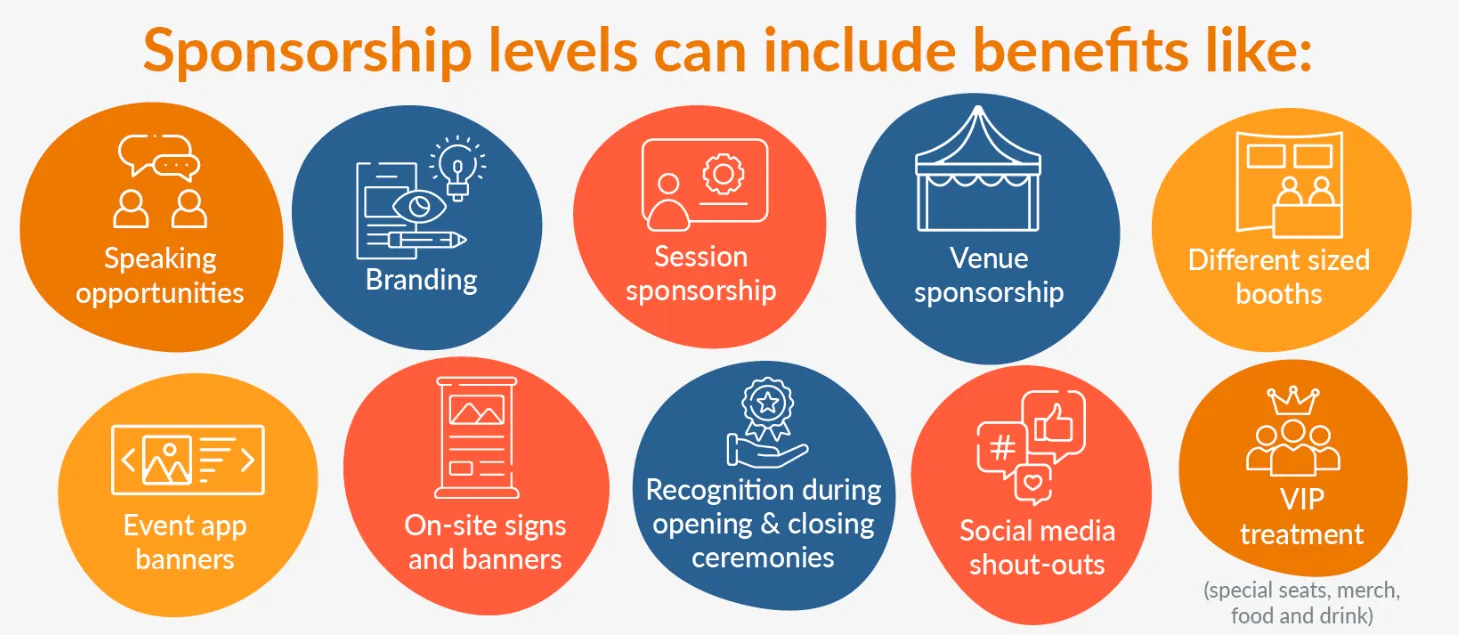
To maximize sponsorship appeal, include benefits that create genuine value:
-
Speaking opportunities
-
Prominent logo placement
-
Social media promotion
-
Attendee data (within privacy guidelines)
-
Product demonstration spaces
-
Direct access to decision-makers
Presenting Your Sponsorship Opportunities
Professional Package Presentation
How you present your sponsor packages can be as important as what they contain. Create professional, branded materials that:
-
Clearly outline each benefit
-
Provide audience demographics
-
Include testimonials from past sponsors
-
Show photos from previous events
-
Present specific ROI metrics when possible
Digital and Print Options
Offer your sponsorship materials in multiple formats to suit different preferences:
-
PDF brochures for email distribution
-
Print materials for in-person meetings
-
Web-based presentations for virtual discussions
-
Video testimonials from previous sponsors
Measuring and Improving Sponsorship Value
Track Meaningful Metrics
To improve your sponsorship programs over time, track and analyze relevant data:
-
Sponsor retention rates
-
Sponsor feedback surveys
-
Attendee engagement with sponsor activities
-
Social media mentions and engagement
-
Lead generation results for sponsors
Continuous Improvement
Use the data collected to refine and enhance your sponsorship offerings:
-
Eliminate benefits that sponsors don’t value
-
Enhance high-performing opportunities
-
Adjust pricing to reflect actual value
-
Create new benefits based on sponsor feedback
Building Long-Term Sponsorship Relationships

Beyond the Event
Effective sponsorship extends beyond a single event. Create year-round opportunities for engagement:
-
Regular updates on industry trends
-
Opportunities to connect with your community
-
Early access to future sponsorship opportunities
-
Recognition in ongoing communications
The Personal Touch
The most successful sponsorship programs include personal relationship management:
-
Assign specific contacts for each sponsor
-
Schedule regular check-ins during the planning process
-
Provide VIP treatment during the event
-
Conduct thorough post-event reviews
Conclusion
Creating sponsor packages that truly deliver value requires strategic thinking, careful planning, and ongoing refinement. By focusing on sponsor needs, creating tiered options, presenting packages professionally, measuring results, and building lasting relationships, you can significantly improve your sponsorship value and create partnerships that benefit everyone involved.